
The case in brief
- Problem: People value journaling but abandon it because a blank page demands time, discipline, and the right words.
- My role: Independent product designer and engineer. I owned the product thesis, interaction model, privacy architecture, and native iOS rebuild.
- Product move: Make speech the starting point, then turn it into an entry that preserves the person’s meaning and voice.
- Outcome: A native, encrypted iPhone app with weekly reflection, semantic search, journal chat, and a dependency-free Swift package backed by 94 passing tests.
Start with the behavior, not the editor
Most journal apps begin with a text field. That recreates the exact moment where the habit breaks: an empty page asking someone to compose a polished thought.
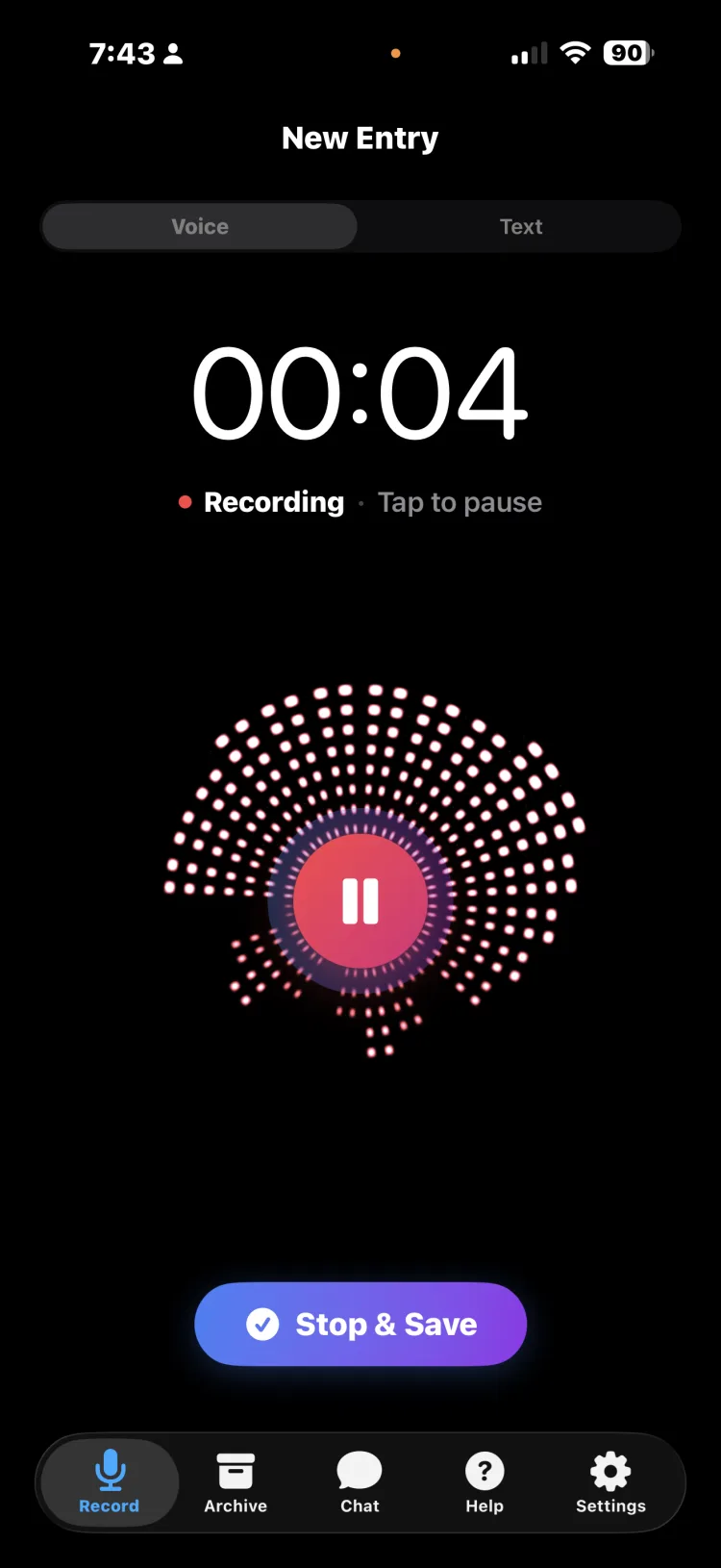
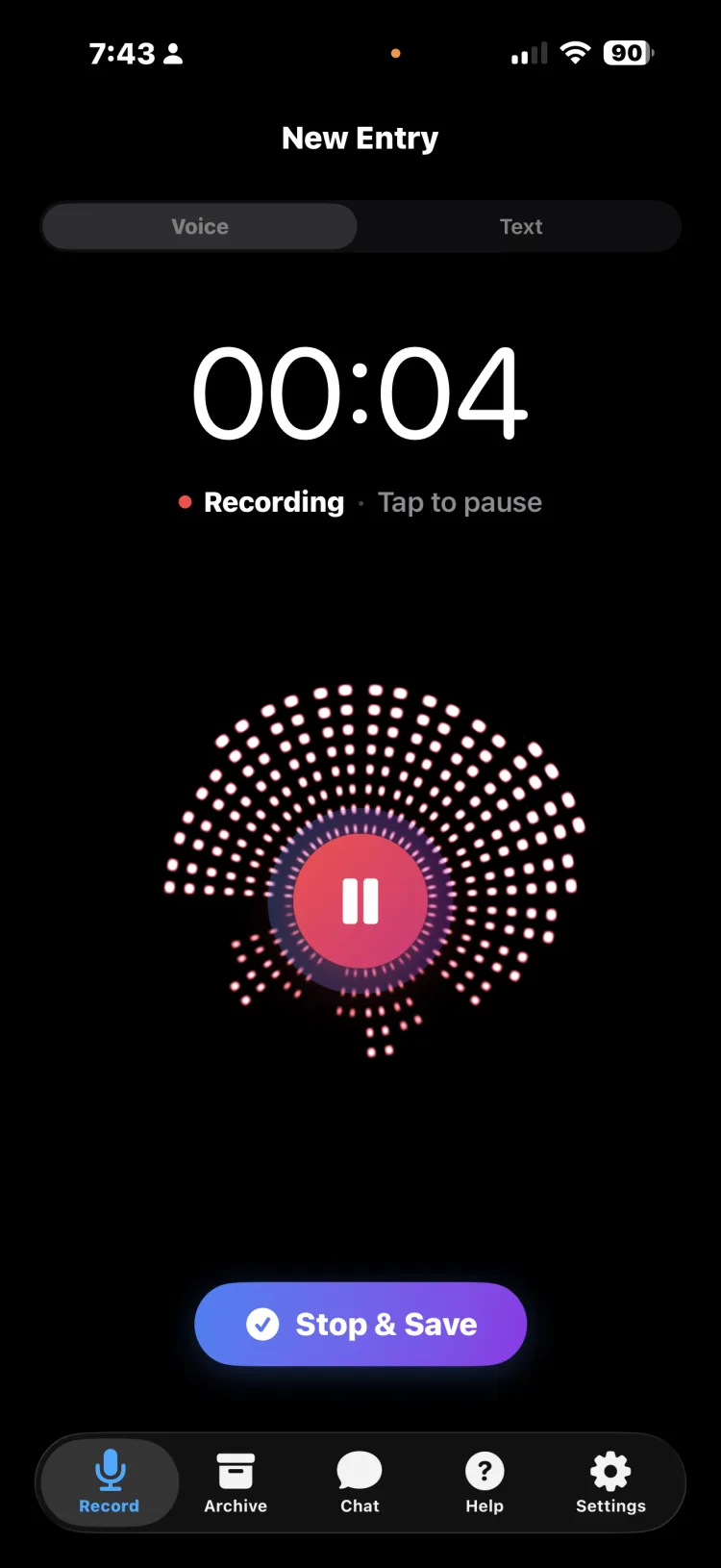
Afterword begins with one primary action: record. A person can speak while walking, driving home, or sitting between meetings. The interface provides a clear recording state, live feedback, and a direct path to save. The product does not ask people to become writers before they can reflect.
Shape speech without erasing the person
When recording ends, Afterword transcribes the audio and turns it into a readable entry. The system removes repetition and verbal clutter, but it is designed to preserve meaning, tone, and the way the person naturally speaks.
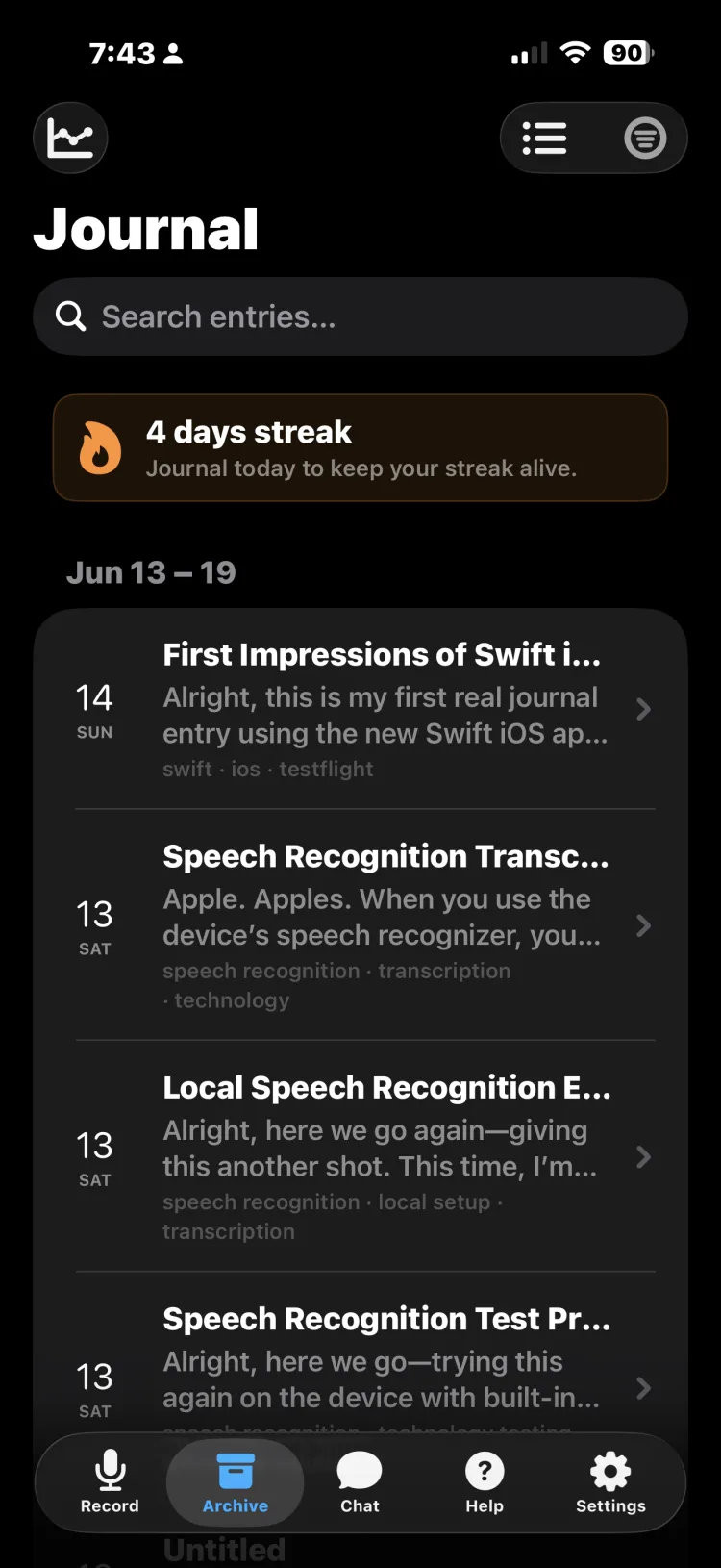
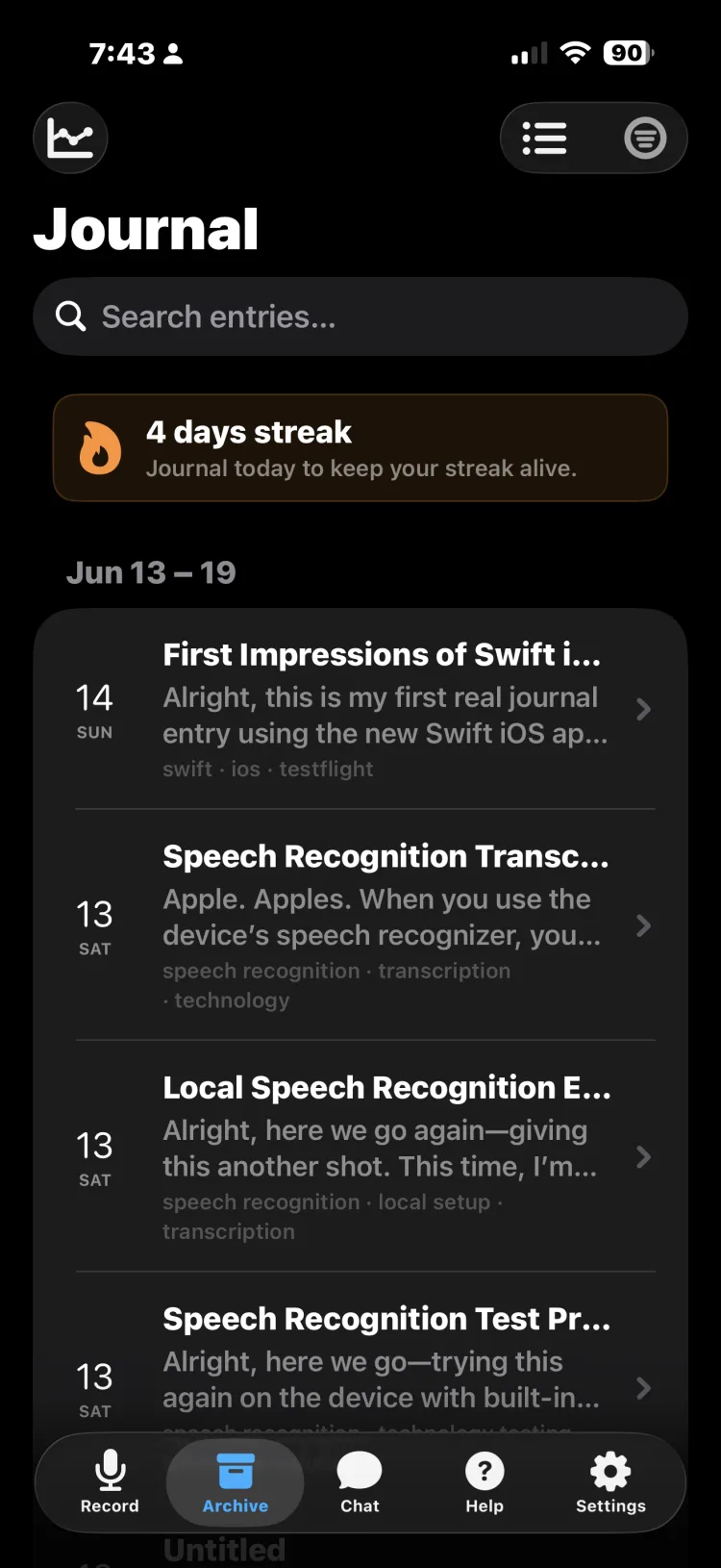
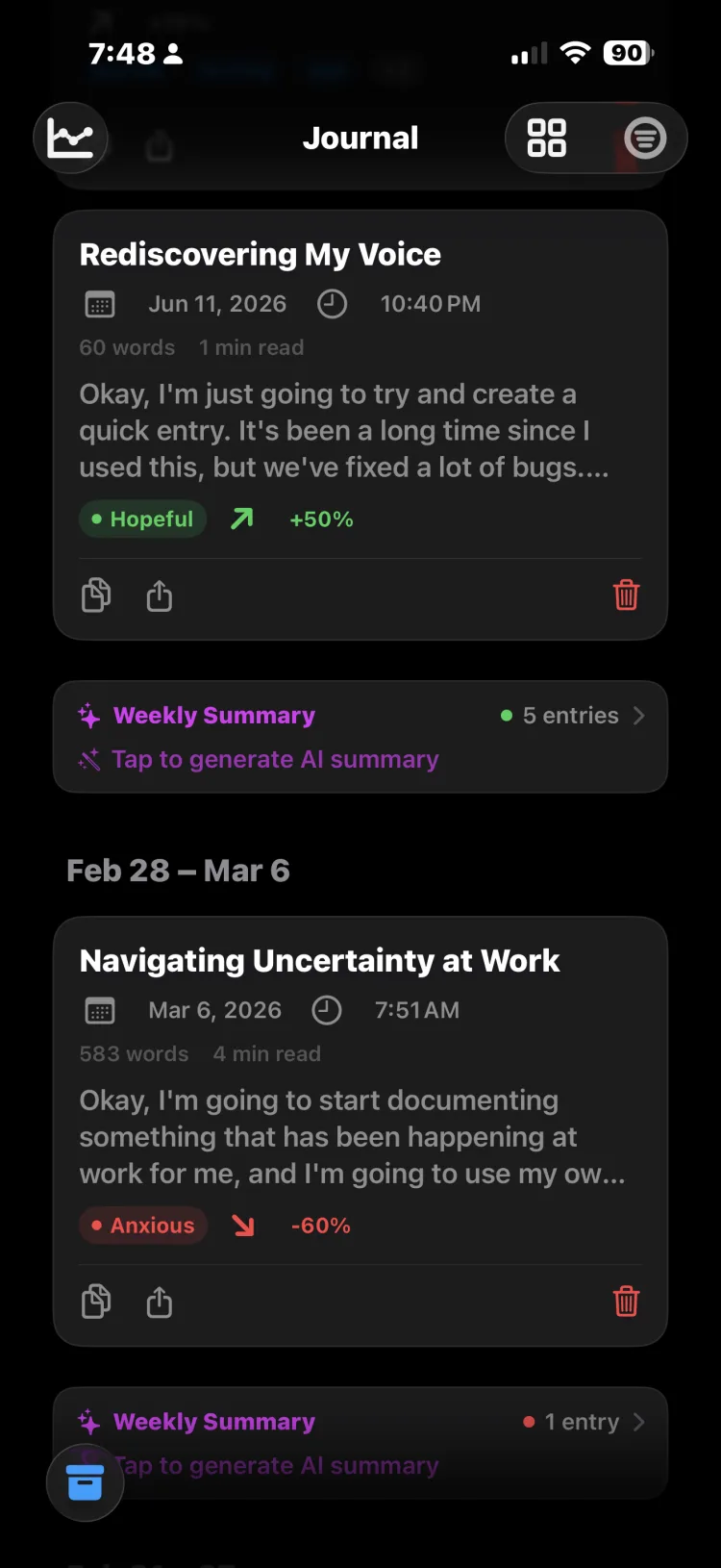
Each entry receives a useful title, tags, and mood metadata. That structure is not decoration. It turns a growing archive of recordings into something that can be searched, revisited, and understood over time.
Design the intelligence around accumulated history
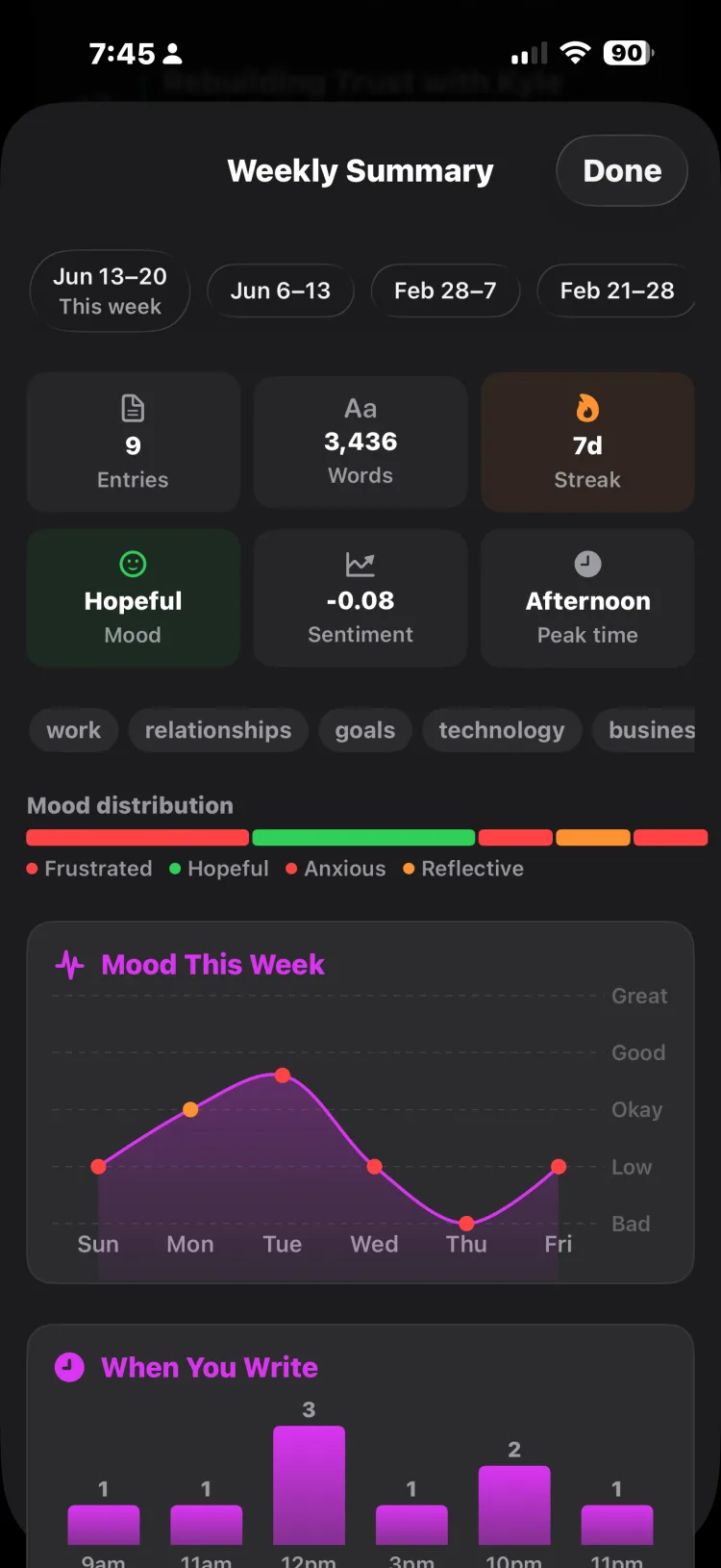
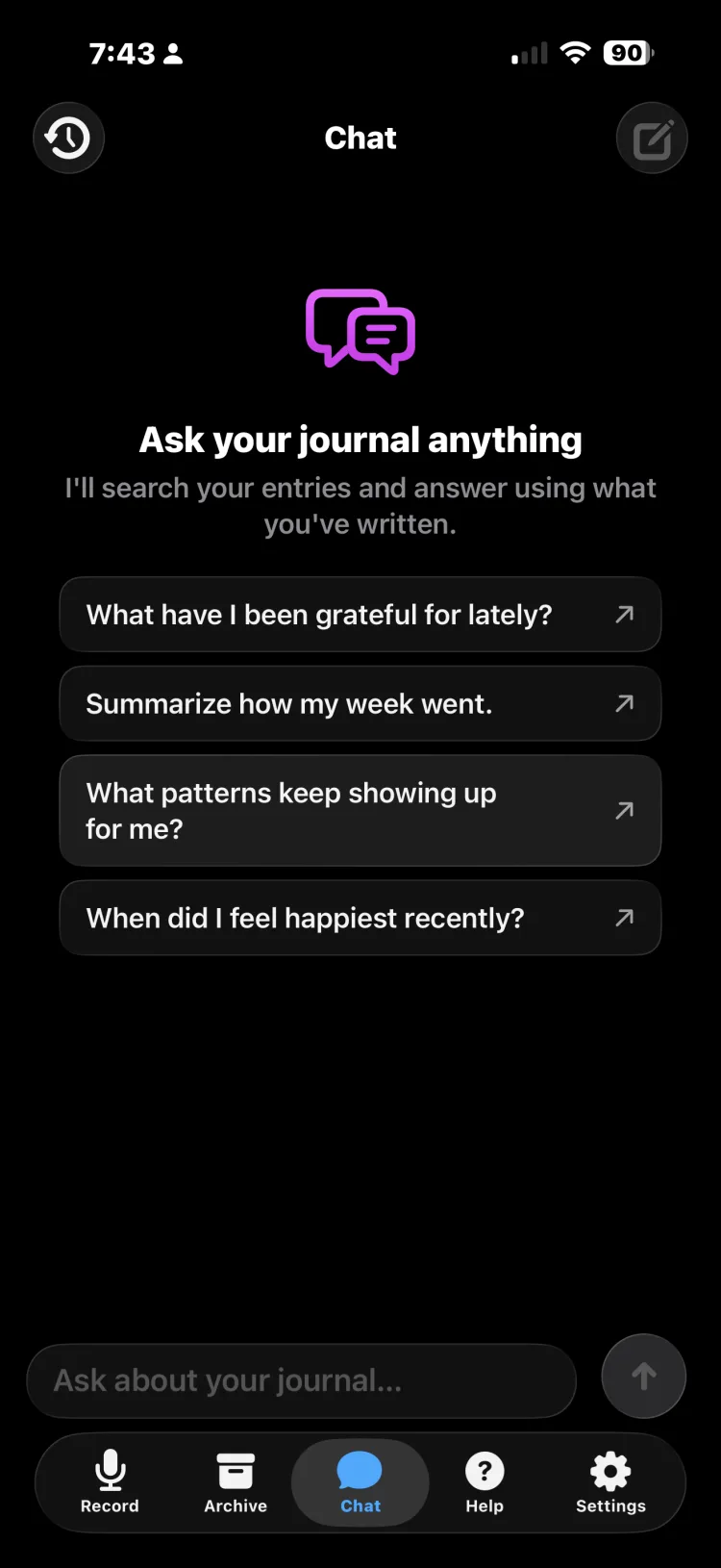
The product becomes more useful as the journal grows. Weekly summaries surface recurring themes, notable moments, and changes in mood. Semantic search finds entries by meaning rather than exact wording. Journal chat retrieves relevant moments from the person’s own history before answering.
That distinction matters. The AI is not there to perform generic coaching or manufacture insight. Its job is to make the person’s own record easier to understand.
Make privacy part of the system
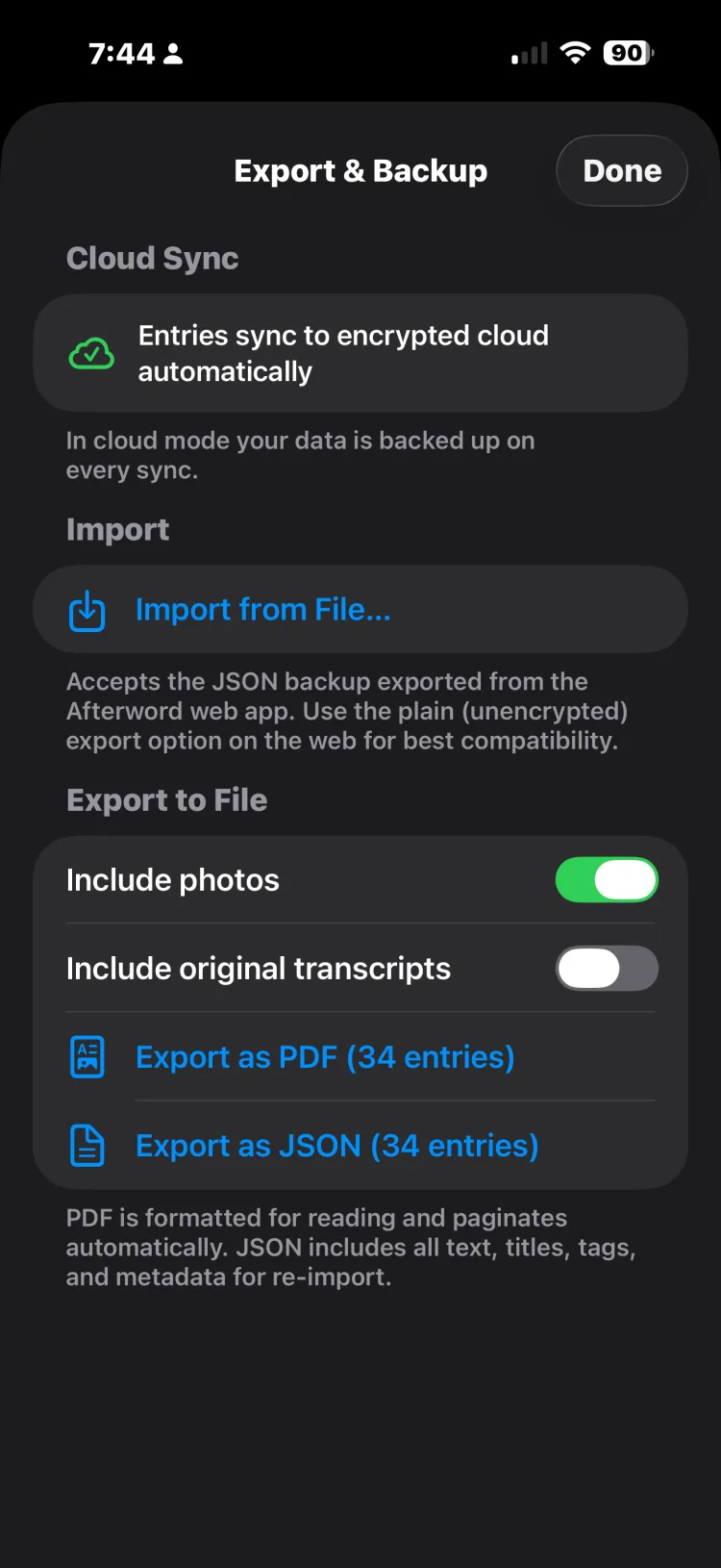
Saved entries are encrypted on the iPhone with a key held by the user. The server stores unreadable data. Encrypted backup is optional, export is available, and an account and its data can be permanently deleted.
The native rebuild preserved the original web service and encryption format. JournalKit—the app’s eight-module Swift package—uses Swift 6, SwiftData, and CryptoKit with zero third-party dependencies. Cross-platform tests verify that the Swift and web clients produce byte-compatible encrypted data in both directions.
What shipped
Afterword moved from a working Progressive Web App to a native SwiftUI product designed for the way an iPhone is actually used: immediate voice capture, a live waveform, widgets, Live Activities, Siri Shortcuts, Spotlight search, photo attachments, and PDF export.
The important result is not the feature count. It is one coherent product decision carried through interaction design, system architecture, privacy, testing, and implementation: remove the blank page, then make reflection more valuable every time someone speaks.