
I have wanted to make a truly original commercial arcade game for a long time. Literally, since I was a teenager, which is longer ago than I like to admit.
The problem was never motivation. It was skills and time. Mostly time.
I have a full-time job, kids, and the usual "life is happening whether you like it or not" situation. Sitting down for God knows how long to properly learn a game engine, graphics pipelines, OpenGL, shaders, audio systems, and all the other things you need to actually ship a good game just wasn't very realistic. I'm sure I'm not the only one struggling with this.
I do have a lot of software development experience. 20+ years of it. It's mostly web sites and applications, mobile apps, and general product work. That means I'm comfortable with code, systems, architecture, debugging, testing, shipping things, and finishing polished projects. But games are their own special universe, and that gap always felt big enough to stop me from starting.
This time, that gap finally felt crossable.
The Spark
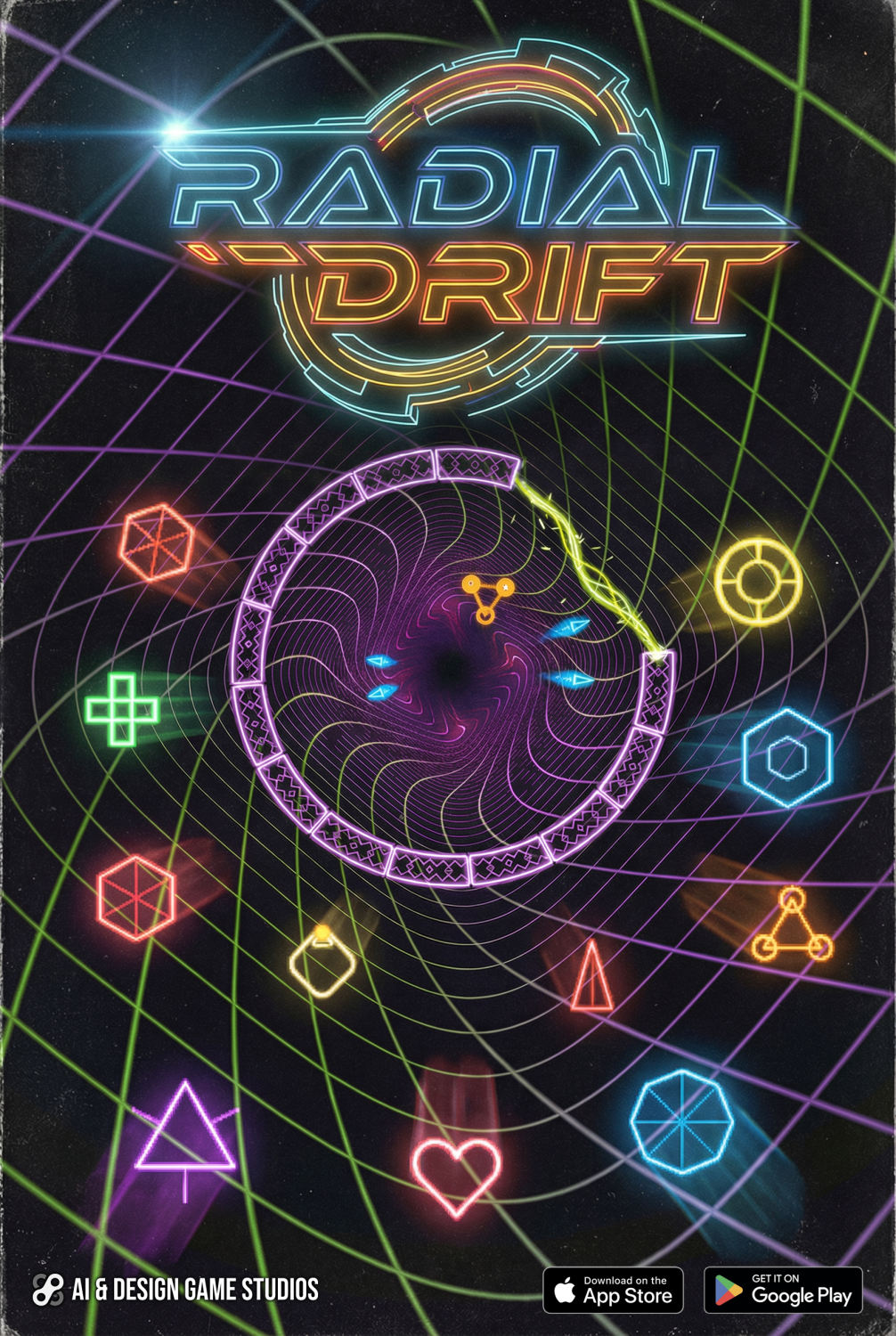
The project started pretty casually. It was a Saturday afternoon. I was thinking about vintage arcade games, specifically that early-80s vector era. Tron-style visuals. Clean geometry. Black backgrounds. Games that explain themselves in about half a second and then slowly ruin your day. The "Vectrex" game console comes to mind. I never owned one but I remember being in complete awe with those when I was a kid.
I started bouncing ideas around with ChatGPT, mostly using it as a brainstorm partner. I wasn't asking it to invent a game for me (LLMs kinda suck at creative thinking anyway), just talking through mechanics and constraints. None of the ideas it gave me really stuck, but somewhere in that back-and-forth, something clicked in my own head.
I pitched the idea back mostly to sanity-check it:
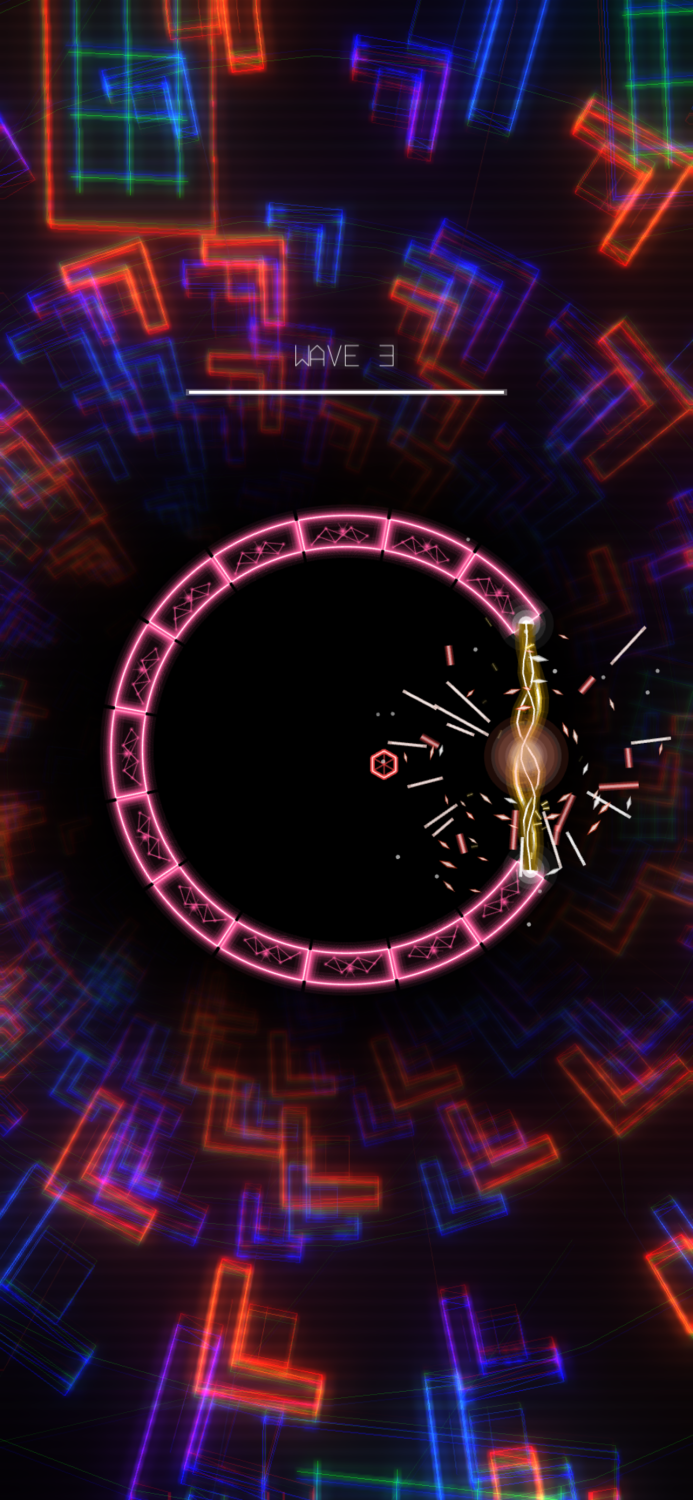
A rotating "wheel", divided into segments. One gap in the wheel, charged by a lightning bolt. Enemies emerge from the center, like in the game "Gyruss" I loved when I was a kid. Catch them in the gap to survive. Miss them, and they smash into the wheel and damage it.
Before I got too excited, I did what I always do: I went researching to see if this concept already existed. I definitely didn't want to make a 'cheap clone' of something that's already there.
Boom!
I spent a good amount of time looking into old arcade games, indie games, obscure gameplay mechanics, anything that matched closely.
I couldn't find anything that really did this. Which is what got me excited.
That doesn't mean it's completely unprecedented, because nothing is, but the core game mechanic felt genuinely new. That was enough for me to stop overthinking it and start building.
From Prototype to "Oh, I'm Really Doing This"
Using AI coding to move fast and fill the gaps in my coding skills, I put together a very rough prototype in about an afternoon. No menus, no music, no polish. Just the wheel, one enemy type, and a black screen. NOT sexy at all.
And... it played REALLY well.
That's the moment where I was like: "Okay, I guess I'm really doing this now. I'm on to something here!". I started to get genuinely excited.
From there, things expanded naturally. I added enemies that damage the wheel, allies that heal it, and some hybrid elements that reward precise timing but still punish you if you mess up. I tried to keep everything readable and consistent, with very simple rules, but lots of pressure once things speed up.
The Difficulty Curve Wake-Up Call
At some point I showed it to my long time friend Tim Samoff who has a lot of actual game development experience. He played it and gave me honest feedback, and the biggest thing he called out was the difficulty curve.
Translation: this is fun, but it's going to break, frustrate or even annoy players in weird ways if you don't fix this.
He sent me an article about game difficulty curves, and reading it was honestly a wake-up call. It explained why some games feel unfair, why others get boring, and how good arcade games slowly train you before throwing you into absolute chaos.
I went back and reworked the game with all that stuff in mind: spawn timing, pacing, escalation, recovery moments, close calls, narrow escapes, all of it. The difference was massive. The game now ramps from approachable and laid back casual to completely unhinged in a way that feels smooth instead of mean or unfair.
The Polish Phase
After that came the least glamorous part: polish.
I spent an unholy amount of time just playing the game over and over. It was mostly me because it's surprisingly HARD to get others to really test your stuff. Even close friends. They'll be happy to take a quick look and say: "Cool, Marco!" but that's really not what I needed of course.
Tweaking the difficulty. Fixing edge cases. Chasing bizarre, hard to reproduce bugs. Breaking things. Fixing them again. At some point I realized I wasn't really finding issues anymore. I play the game a lot, and it's extremely stable now, which is not something I say lightly.
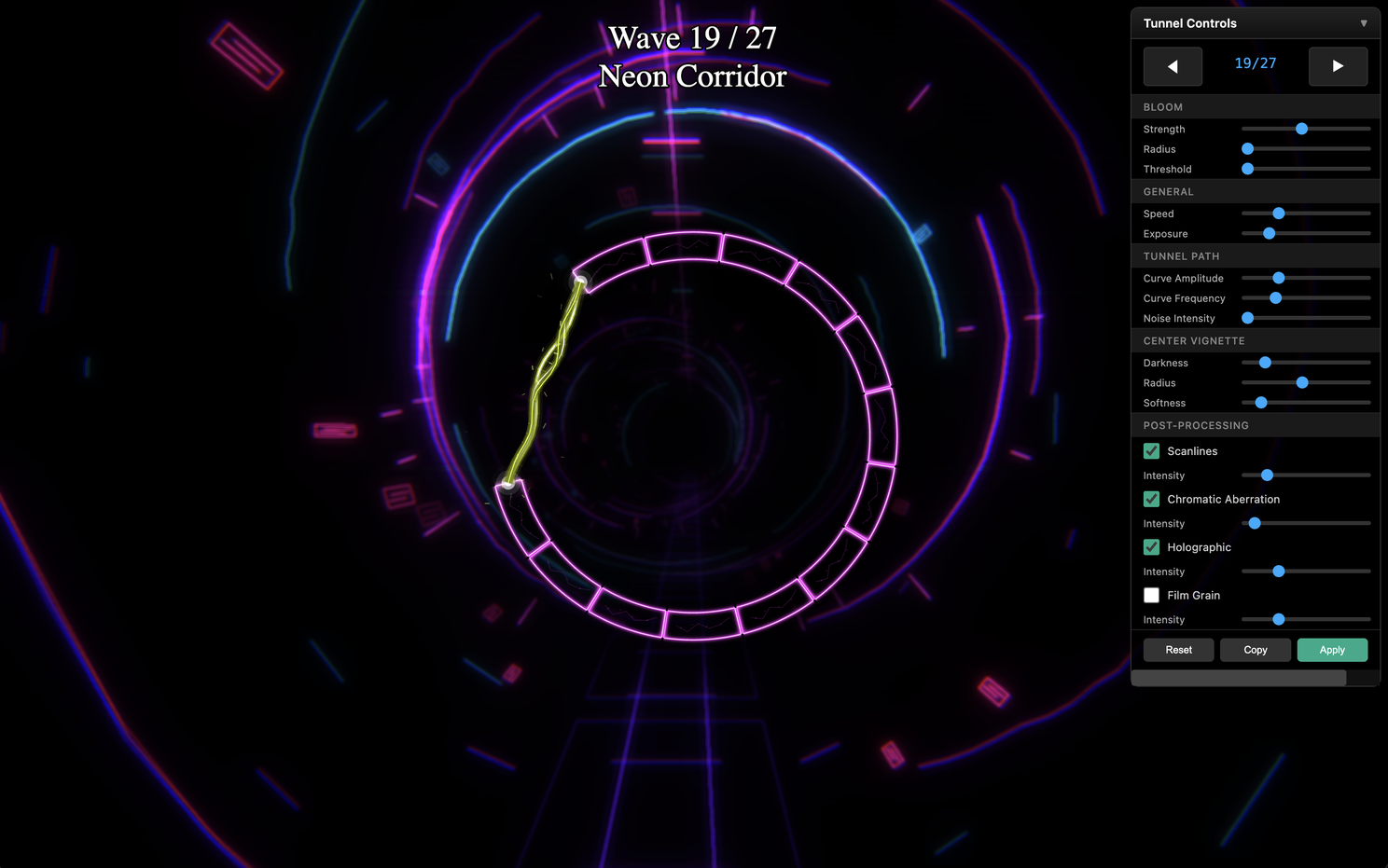
The visuals went through the same process. I didn't want the backgrounds for each wave to just look cool; I wanted it to support the gameplay without distracting from it. So I built a small custom tool just to tweak the background shaders in real time until the motion, glow, and contrast felt right. This is the part where you realize you've gone too far and are now building tools to tweak other tools, but... it worked!
Music and Sound
Music was handled the same way. Granted, the tracks used in this game (all 20 of them) already existed but they were created with very specific goals. All of these tracks are made with Suno AI. They are products of one of my AI alter-egos: DJ FL-AI. Just another labor of love project I have been obsessing over for almost 2 years now. I'm too old to go to EDM raves but I'm living it vicariously through DJ FL-AI.
What AI Actually Did (and Didn't Do)
AI helped a LOT along the way. It helped me move fast, explore ideas, and bridge gaps I didn't realistically have time to fill from scratch, like game frameworks, rendering details, low-level graphics concepts, performance optimization and more. My existing software background definitely helped me drive the project to the finish line, but AI made the on-ramp much shorter.
What it did NOT do was "make the game for me."
Most of what makes the game feel finished (balance, polish, visual cohesion, stability), came from obsessive iteration and judgment. From playing it too much. From fixing small things nobody would notice unless they were playing for a very long time.
Shipping It
Eventually, the game reached a point where it just felt done.
Not "good enough," not "interesting," but something I was comfortable putting my name on and selling. Something I'm really proud of.
That's how this whole thing went from a vague idea, from a one-afternoon prototype, to a shipped commercial iOS, Android and macOS game. No big dramatic moment. No overnight success story. No "I one-shotted something amazing!" Just loads of small decisions, tons of testing, and a willingness to keep going after all the exciting parts were over.
Screenshots and videos show what it looks like. The rest only really makes sense once you play it.
This is Radial Drift. This is MY original game. Made possible with the help of AI.
Radial Drift is now available for macOS and Android at the Radial Drift website and in the iOS App Store.
Tools and Credits
Love goes out to:
Marco van Hylckama Vlieg
AI & Design Expert, Creator of innovative AI-powered solutions and educational content.